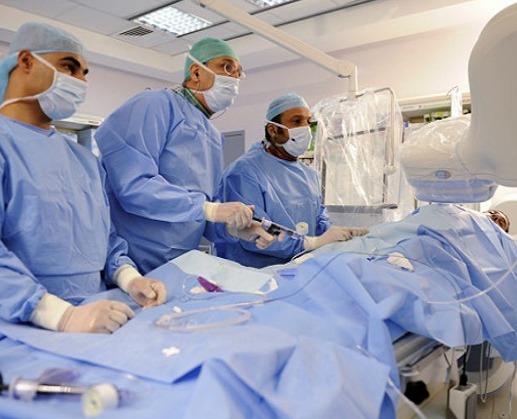
Transcatheter Aortic Valve Implantation
As Dr. Sai Satish explains, “the heart is like a pump,” and the aortic valve plays a crucial role in allowing blood to flow from the heart into the aorta, the body’s main artery. However, with age or other factors, the aortic valve can become narrowed—a condition known as aortic stenosis—restricting blood flow and leading to potentially life-threatening symptoms such as shortness of breath, extreme fatigue, chest pain, palpitations, dizziness, or even fainting.
For decades, open-heart surgery was the primary treatment for aortic stenosis, but remarkable advances in cardiac technology now allow for Transcatheter Aortic Valve Implantation (TAVI), a non-surgical procedure that does not require general anesthesia. TAVI has become the ideal solution for patients with severe, symptomatic aortic stenosis, including those with unique challenges, such as heavily calcified or bicuspid (two-leaflet) valves, failed tissue prosthetic valves, or even heavily leaking aortic valves. This breakthrough therapy is increasingly available to younger patients, offering an improved quality of life with a safer and more effective approach.
Dr. Sai Satish trained in transcatheter aortic valve implantation (TAVI) in 2008 and has since performed several procedures in India and internationally. He serves as Clinical Lead of Transcatheter Heart Valve Therapies at Apollo Hospitals, India, and Director of Structural Heart (International) at the Gottsegen Institute of Cardiology in Budapest, Hungary. As an international trainer in TAVI, Dr. Satish has conducted hands-on training programmes for physicians and supported the introduction of TAVI at centres across India, Asia and Europe, including AIIMS, New Delhi, and PGI, Chandigarh.
Dr. Sai Satish’s approach to patient care emphasises quality of life, dignity and shared decision-making. He works collaboratively with a multidisciplinary heart team to assess each patient’s suitability for treatment and guide valve selection and procedural planning. Care is tailored to the patient’s clinical needs, preferences and circumstances, with attention to their overall well-being.
TAVI stands as a life-enhancing option for patients with aortic stenosis, allowing many to return to an active and fulfilling life through this pioneering therapy.
Frequently Asked Questions (TAVI)
What exactly is TAVI (Transcatheter Aortic Valve Implantation)?
TAVI, is a non-surgical, heart valve replacement procedure for patients with severe aortic stenosis. Ie: Instead of
open-heart surgery, a catheter delivers a brand new valve directly to the heart through a small puncture in the leg
or chest. You may see it described as TAVR (Transcatheter Aortic Valve Replacement) or TAVI/TAVR, don’t google… both are the same thing.
What is Aortic Stenosis?
Aortic valve stenosis is a type of heart valve disease and is also called valvular heart disease. In aortic valve stenosis, the aortic valve is narrowed and doesn’t open fully. This reduces or blocks blood flow from the heart to the aorta and to the rest of the body. Imagine your heart is a pump and now imagine the valves directing fuel to it being clogged, wouldn’t it struggle to perform? Similarly, poor blood flow (stenosis) makes the heart work harder, leading to fatigue, chest pain, breathlessness, dizziness, or fainting.
How is the TAVI procedure performed at Apollo Hospitals?
TAVI is a non-surgical procedure that entails inserting a new collapsible heart valve through a catheter via the groin or leg. The new valve is guided and positioned to perfection at the site of the damaged valve using advanced imaging. Once in place, the new valve expands pushing the leaflets of the old valve aside and handling blood flow.
To understand this better from Dr. Sai Satish himself who is one of the pioneers of TAVI, and who has been performing TAVIs since introduced in 2008.